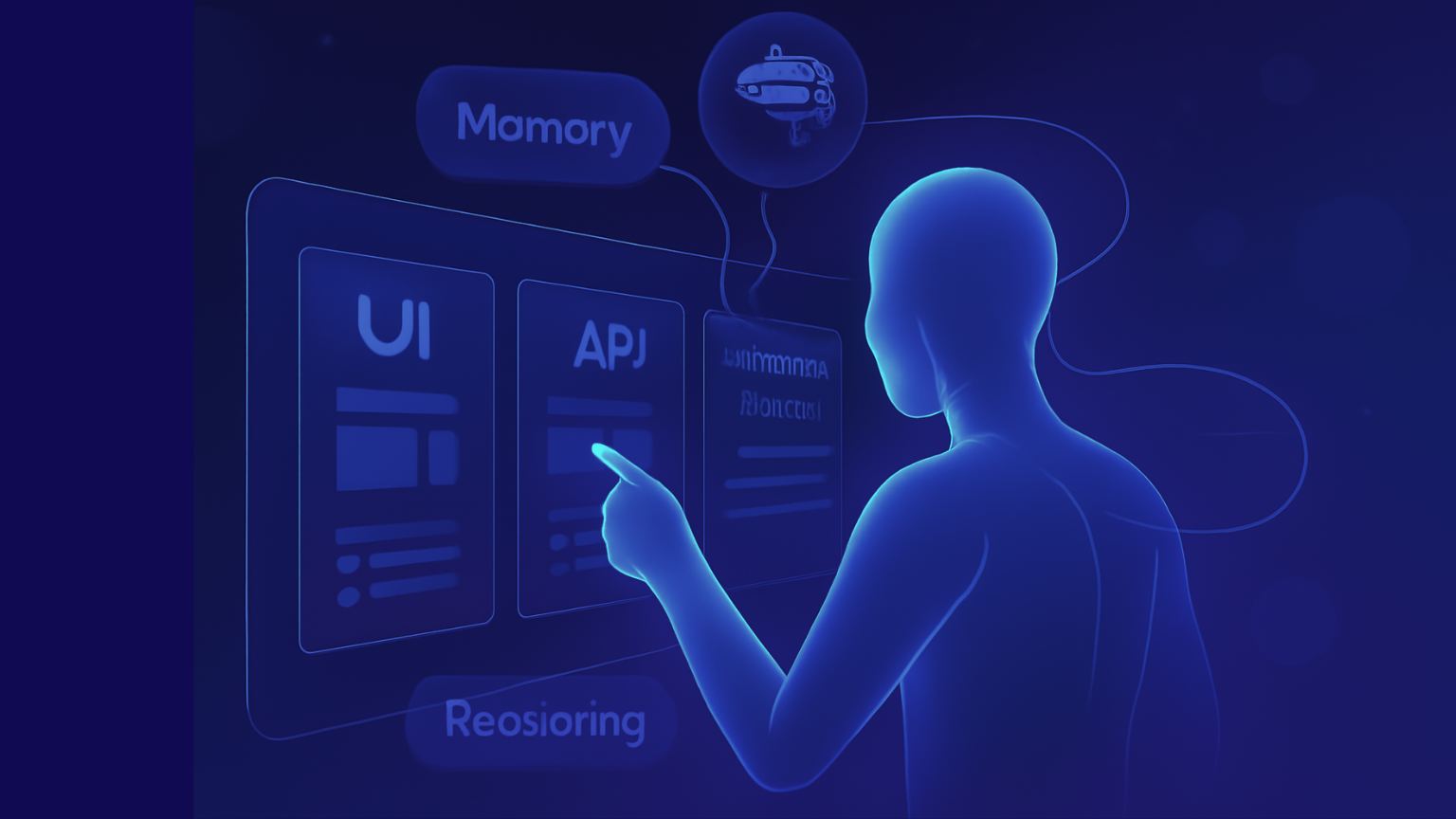
AI agents reason from state, not fixed instructions
Cross-layer insights boost UI, API, and logic coverage
Autonomous planning enables goal-driven test flows
Predictive patterns help detect risks earlier
Continuous testing fits smoothly into CI/CD pipelines
Intelligent triage clusters failures by root cause
Agents learn from past runs to refine future tests
Multi-stage SDLC support improves release quality
Suits fast-changing apps with shifting interfaces
Lower maintenance and higher reliability at scale
Share with your community!
Agentic AI in QA: Redefining the Future of Software Testing
Agentic AI is starting to feel like the missing piece in modern QA. Not the flashy kind of AI that throws out random tests, but the kind that behaves with purpose, evaluates context, and decides what to do next without waiting for human hand-holding. When four out of five developers already believe AI agents will be as standard as IDEs, you can sense where the industry is heading.
What Exactly Is Agentic AI Testing?
Agentic AI testing is built around one idea: software that doesn’t wait for instructions to break before doing something about it. It behaves with intent. It treats testing as a problem to solve rather than a checklist to execute. The agent studies the environment, interprets the state of the system, decides what action makes sense next, and carries it out. That loop continues until the test objective is resolved.
Traditional scripts can’t cope when the UI shifts, an API payload changes, or the DOM reorganizes itself—they just fall apart. Agentic AI, on the other hand, adapts because it’s guided by purpose rather than fixed locators. Platforms like ZeuZ are already trying out more reasoning-based workflows to cut down on all the babysitting. The goal is stability you can trust through unpredictable application changes.
What makes Agentic software testing AI different is its memory of previous runs. It learns why something failed, what worked last time, and how the application normally behaves. That creates an internal playbook it uses to refine itself. Over time, its decisions feel less mechanical and more like a junior engineer who’s finally gaining confidence.
The Mechanics Behind Agentic AI–Driven Test Automation
Agentic AI works by constantly cycling between three actions: observe, reason, and act. That loop might sound simple, but it fundamentally changes how automation behaves.
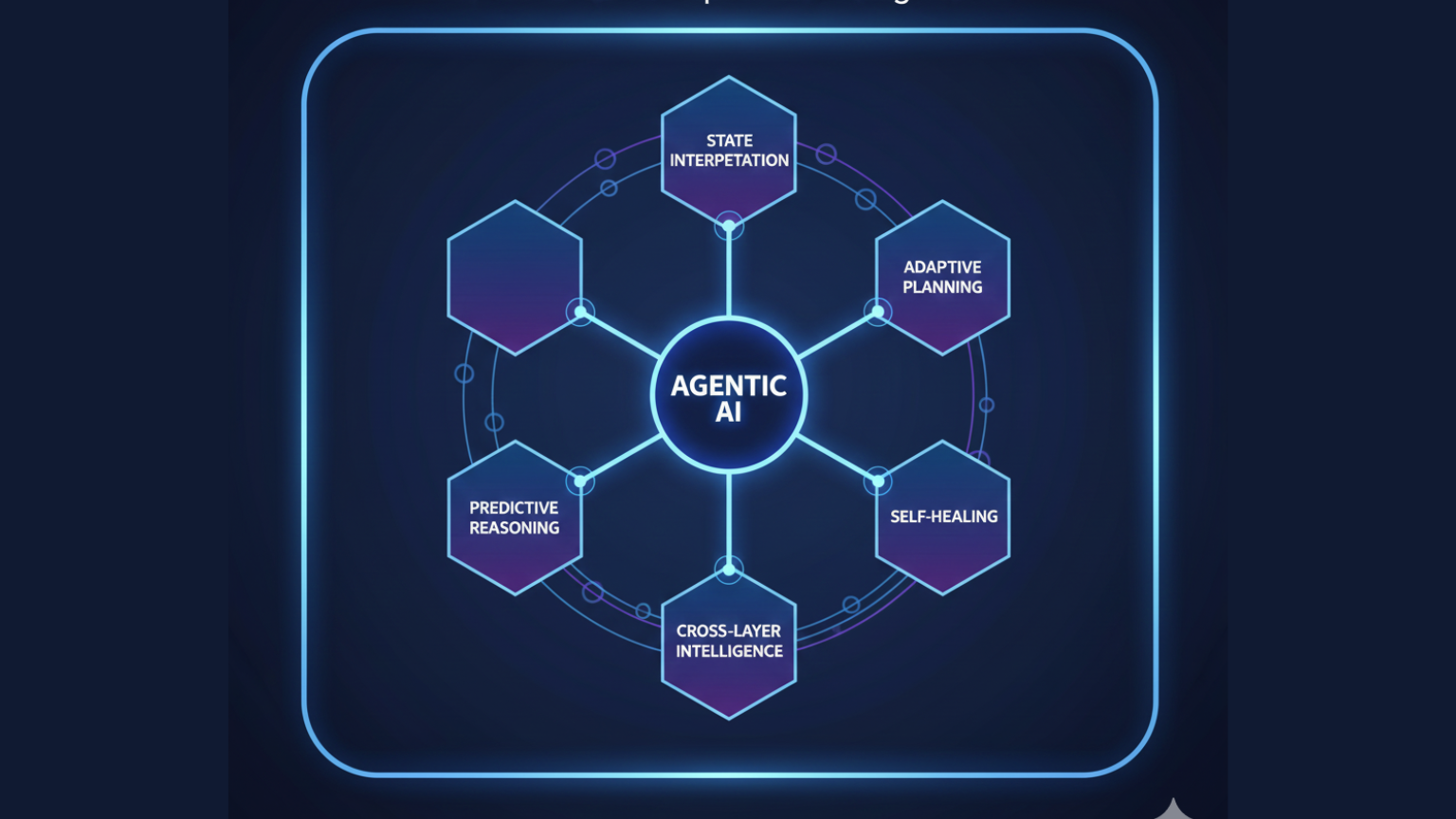
It doesn’t rely on brittle instructions. It pieces together information from the UI, APIs, logs, and prior outcomes, then decides how to move forward. It interprets the state instead of following hardcoded flows. A changed element, a new error message, or a slightly different user path is an input for it. The AI agent recalculates the route and continues working toward the test objective. A few core mechanics drive the entire process:
■ State interpretation: It evaluates UI elements, API responses, and app signals instead of relying on fixed selectors.
■ Adaptive planning: It adjusts its plan on the fly when the system deviates from expected behavior.
■ Self-healing automation: It repairs broken tests with context-based matching rather than static rules.
■ Predictive reasoning: The AI agent anticipates likely outcomes using patterns from previous runs.
■ Cross-layer intelligence: It weaves UI activity, API testing behavior, and system logs into its decision cycle.
Core Functional Capabilities of Agentic AI
Agentic AI behaves less like a script engine and more like a tester that pays attention to patterns, reacts to context, and adjusts its plan mid-execution. The difference shows up the moment the system changes shape. Instead of collapsing, the AI agent re-evaluates the flow, updates its assumptions, and keeps going. That adaptability is what separates agent-based systems from traditional automation. Agentic AI brings several capabilities that reshape everyday testing:
Goal-directed autonomy
Give it a testing objective, and it figures out the route on its own. It tracks the state of the application, chooses test paths, and decides when deeper validation is needed.
Ongoing test evolution
Scripts don’t stay static. The AI agent studies past runs, identifies brittle steps, and adjusts its actions. A locator breaks, an interaction shifts, a response changes—the agent restructures the test without waiting for human cleanup.
Pattern-driven issue detection
AI Agents analyze clusters of anomalies instead of treating each failure as an isolated event. This allows teams to catch systemic risks long before they snowball.
Cross-layer understanding
It doesn’t stop at UI traffic. It follows data through API calls, async updates, backend calculations, and user-facing states. Coverage grows organically instead of being forced through rigid frameworks.
Self-repair under change
When the interface moves or system logic shifts, the AI software testing agent compares historical behavior with the new pattern and patches the test. This is how companies reduce maintenance hours by a wide margin once they introduce autonomous systems.
Transforming the SDLC: Agentic AI’s End-to-End Impact
Agentic AI doesn’t sit in one corner of the software development lifecycle (SDLC). It threads through every stage, from early planning to production monitoring. That cross-phase involvement changes how teams coordinate, how they measure risk, and how they ship. The broader shifts look like this:
✓ Earlier clarity during requirement reviews
It scans user stories, detects missing paths, and highlights unclear conditions. Teams catch logical gaps before they become expensive rewrites.
✓ Support during development
While engineers are coding, the agent models possible user flows and identifies logic that’s likely to break under edge conditions. This reduces late-stage discovery and smooths the sprint.
✓ Continuous adaptive testing inside CI/CD
The moment a build lands, agentic AI launches context-aware test runs, updates risk maps, and streams results to test reporting tools. Testing shifts from a scheduled event to a constant presence.
✓ Intelligent triage
Rather than flooding teams with unfiltered logs, the AI testing agent clusters failures based on shared patterns and impact, then pinpoints the most probable source. Troubleshooting becomes direct instead of chaotic.
✓ Production drift detection
When real users behave differently from staging simulations, it flags the drift and generates new tests automatically. This reduces the surprise failures that typically appear weeks after release.
✓ Scalable quality across multiple products
It learns from one system and can apply those insights across others. Large organizations feel the compounding effect quickly, as each environment makes the agent smarter.
Manual Testing vs. AI Agent–Driven Software Testing
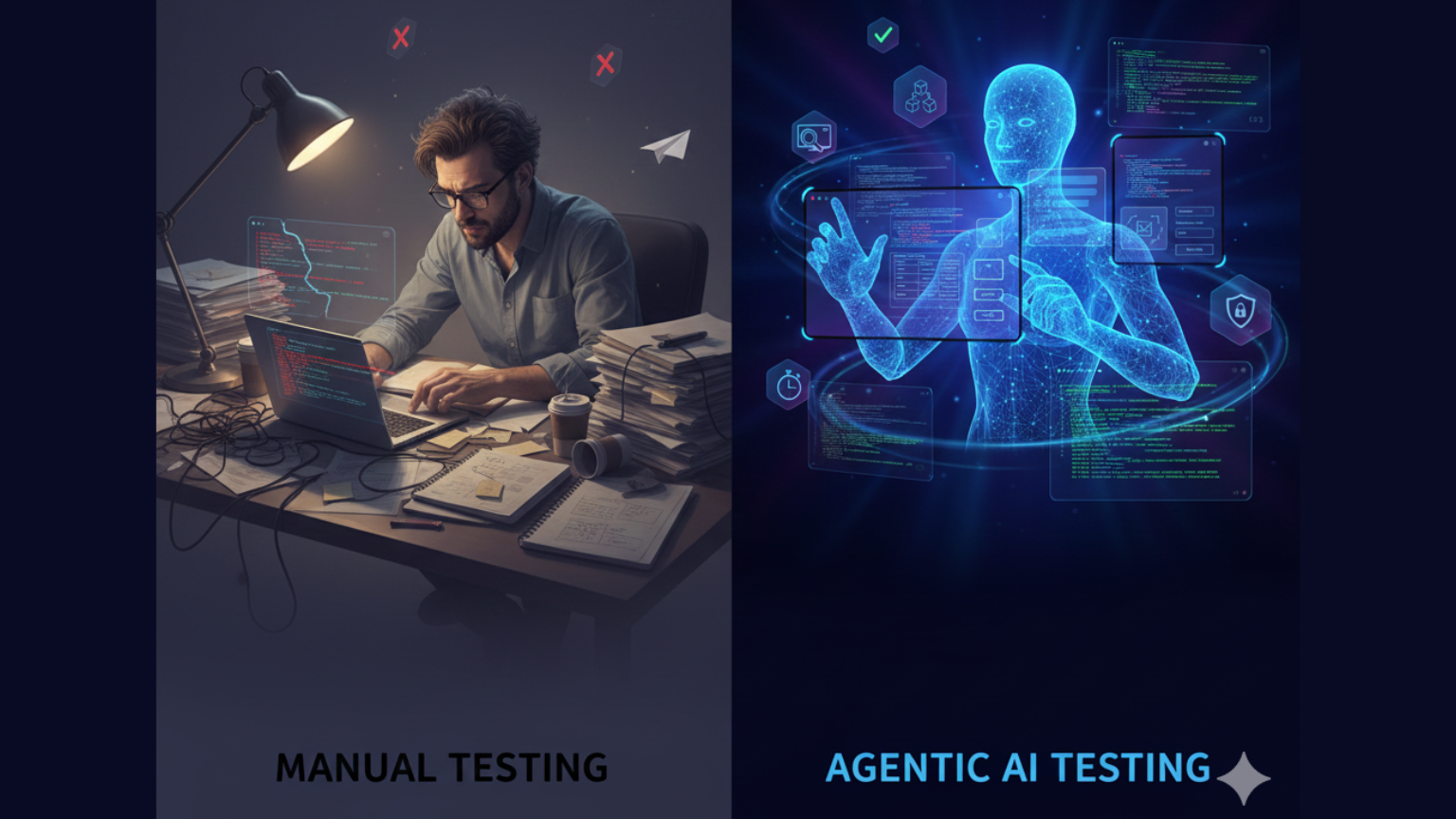
Manual testing carries its own strengths—human judgment, creativity, intuition- but it struggles under scale. The real cost builds up in regression cycles, repetitive re-validation, and the slow grind of keeping scripts afloat. Agentic AI absorbs that load, adapts to system changes, and pushes testing forward at the pace modern releases demand. A side-by-side view makes the contrast clearer:
Area
Manual Testing
Agentic AI–Driven Testing
Test Creation
Built step-by-step by humans
Generated based on goals, context, and system state
Maintenance
Breaks frequently, requires constant fixing
Self-healing logic repairs most breakages automatically
Regression Speed
Slow, repetitive, often delays releases
Continuous, adaptive, triggered automatically
Coverage Scope
Cost Over Time
Limited by available hours
Scales poorly as apps grow
Expands across UI, API, and deeper logic layers
Drops due to reduced labor and script upkeep
Reliability
Varies based on who performs the tests
Stable, pattern-driven behavior
Exploration Depth
Bound by human bandwidth
Discovers flows users often take but humans overlook
Scalability
Team-size dependent
Resource dependent, not headcount dependent
Agentic AI Testing vs. Robotic Process Automation
RPA grew up solving repetitive business tasks. It clicks buttons, fills forms, copies data, and follows predictable steps built around fixed rules. That works for workflows that rarely change. Software testing is the opposite. Interfaces shift, logic evolves, dependencies move, and system behavior isn’t static. AI software testing agents survive that chaos because it reasons about intent instead of rigid instructions. The distinction becomes obvious once you compare them side by side:
Area
Robotic Process Automation (RPA)
Agentic AI Testing
Primary Purpose
Automates repeatable business workflows
Validates evolving software behavior
Adaptability
Breaks when the interface changes
Re-plans actions using context and system state
Decision-Making
Rule-based execution
Autonomous reasoning and goal-driven action
Error Handling
Stops on unexpected outcomes
Investigates, adjusts, and continues
Testing Depth
Limited to surface-level interactions
Evaluates UI, APIs, logic flows, and cross-layer signals
Scalability
Works best in predictable environments
Performs across dynamic applications and shifting architectures
Maintenance Load
High
Significantly lower due to autonomous self-repair
Use Cases
Data entry, form filling, scheduled business tasks
Regression testing, risk detection, exploratory flows, production drift analysis
# Primary Use Cases of AI Agents in Software Testing
Agentic AI fits anywhere traditional automation struggles with unpredictability, change, or scale. It thrives in environments where logic and interfaces evolve week after week. Teams introduce it gradually, and it grows into a co-tester that handles complexity without slowing down. The strongest use cases include:
● Regression testing under shifting UI structures
The agent compares new builds with historical behavior, identifies what changed, and updates tests without human cleanup.
● Exploratory flow discovery
It navigates applications the same way an experienced tester would—trying alternate paths, branching into unexpected states, and highlighting risky areas.
● Adaptive API coverage
When API behavior shifts, the agent recalculates the expected responses and reconstructs validation steps. This blends smoothly with existing API testing pipelines.
● Production drift monitoring
If live users reveal patterns that weren't in staging, the agent reproduces those paths and creates fresh tests on the fly.
● Root-cause grouping and triage
Instead of drowning teams with failures, the agent clusters them by pattern and assigns likely origins, making debug cycles faster.
● Cross-platform consistency audits
Mobile, browser, and desktop variations often hide subtle inconsistencies. The AI testing agent compares behaviors across environments and flags mismatches without extra scripting.
Challenges and Potential Risks of Agentic AI Testing
Agentic AI isn’t magic. It trades predictable scripts for autonomous reasoning, and that shift brings its own set of complications. Teams must understand these edges before deploying agent-driven systems at scale.
■ Opaque decision-making
Agents make choices based on internal reasoning that’s not always intuitive. If the agent reroutes a test or repairs a step, QA teams need traceability to understand why. Without that visibility, debugging becomes harder instead of easier.
■ Overconfidence in autonomous repairs
Self-healing feels convenient, but it can mask deeper architectural issues. Poorly structured tests might continue “working” in a degraded way if the agent adapts around broken logic.
■ Training requirements and onboarding time
Agents need exposure to representative flows. If the environment doesn’t offer consistent examples, the agent’s reasoning becomes unreliable.
■ Risk of chasing false signals
When data is noisy, the agent might misinterpret unexpected behavior as intended behavior, which can lead to incorrect assumptions. Safeguards must prevent this kind of drift.
■ Security and data handling concerns
Agents observing systems at depth must respect least-privilege access. Sensitive data inside testing pipelines demands guardrails with special scrutiny in industries with compliance mandates.
■ Infrastructure pressure
Reasoning cycles require processing power. Teams need environments capable of supplying logs, telemetry, and state information without slowing down pipelines like CI/CD runs.
What’s Next? Emerging Trajectories for AI Agents in QA
Agentic AI is shifting from “smart automation” to something closer to a collaborative quality system. The early wave focused on reducing maintenance and adapting to UI drift. The next wave expands its role: understanding product intent, predicting where risk will appear, and participating in decisions traditionally handled by senior QA engineers.
You can see the edges of this evolution now. Agents analyze logs, detect behavioral patterns across builds, and adjust strategies without human nudging. The next steps look even more structural:
Multi-agent ecosystems: Different agents specialize. One explores new flows. Another validates logic. Another observes performance signatures. They share findings and adjust as a group.
Predictive quality modeling: Agents examine usage patterns, code changes, and historical defects to forecast where failures are likely to appear. Risk maps shift from backward analysis to forward planning.
System-aware testing: Architectures that expose structured telemetry let agents reason with clarity. This pushes testing closer to how systems engineering teams already operate.
Automated performance and reliability audits: Agents will orchestrate targeted performance checks, correlate them with past baselines, and understand when bottlenecks signal deeper architectural issues.
Production-informed test generation: Real user sessions influence new test flows, closing the gap between how the system is designed and how it’s used.
Industry-Wide Challenges and How Agentic QA AI Provides Solutions
Different industries face very different quality challenges. Agentic AI doesn’t solve them with generic automation tricks. It reacts to the root problems each sector struggles with—scale, volatility, regulatory pressure, cross-platform complexity, and unpredictable user behavior.
Finance : High Change Frequency and API Volatility
Financial apps depend on API-heavy architectures where a small shift in business logic ripples across dozens of dependent services. Teams spend huge amounts of time tracking down why a response format changed or why a validation rule no longer matches production behavior. Agentic AI reacts by analyzing response drift across builds, adjusting validation logic automatically, and generating targeted tests where the volatility is highest. The result is fewer false alarms and tighter alignment between rules and real-world behavior.
E-commerce : Constant UI Iteration and Seasonal Load Spikes
Retail teams push visual updates weekly, often daily. Interfaces shift, product modules get rearranged, and traffic patterns explode during sales events. Scripted automation collapses under this pace. Agents identify UI changes, repair interaction paths, and adjust element mappings without human intervention. They also detect early signs of performance degradation during seasonal load preparation, giving engineering teams time to act before high-traffic periods hit.
Healthcare : Compliance Pressure and Data Sensitivity
Healthcare teams operate under strict regulatory expectations. A missing validation or an inconsistent workflow can trigger compliance flags. Manual review cycles are slow and expensive. Agentic AI analyzes workflows end-to-end, highlighting places where behavior deviates from documented requirements. It tracks every adjustment with full traceability, allowing auditors to see why changes occurred. Data access stays constrained to what the agent needs, reducing the risk footprint.
Ethical and Regulatory Considerations for Implementing Agentic AI
Implementing Agentic AI comes with responsibility. AI agents make decisions autonomously, which raises questions about accountability, transparency, and compliance. Without clear policies, organizations risk introducing bias, misinterpreting results, or violating regulations. Ethical considerations include:
■ Decision Traceability: Every action an AI agent takes must be logged. Teams should know why a test was created, why a failure was flagged, and how coverage decisions were made.
■ Bias Prevention: Agents trained on historical test data may replicate flawed assumptions. Review and validate test logic regularly.
■ Data Privacy: When handling sensitive test data, ensure masking, anonymization, and access controls are enforced.
■ Human Oversight: Despite autonomy, human validation must remain part of critical decision points, especially for high-risk releases.
■ Compliance Alignment: Agents should operate within the bounds of regulatory frameworks, such as GDPR, HIPAA, or financial compliance standards, especially when automating API testing or web automation flows.
Final Words
According to a 2025 report, more than 72% of QA teams are considering or preparing to implement AI-powered testing workflows. It’s the future. Agentic AI is changing the rules of QA. Autonomous, adaptive, and intelligent, it makes testing faster, safer, and more reliable. If your team wants to explore this shift in real-world workflows, platforms like ZeuZ provide the tools, integrations, and guidance to start today.
Frequently Asked Questions (FAQs)
How Does Agentic AI Differ from Traditional Test Automation?
Traditional automation executes pre-defined scripts. Agentic AI reasons, adapts, and generates tests based on evolving requirements and system states.
What Architecture Powers an Agentic AI Testing System?
Multi-layered: orchestration for workflow, learning agents for adaptive testing, integration with flow control mechanisms, and CI/CD pipelines.
Which tools and frameworks support Agentic AI testing?
Platforms like ZeuZ embed agentic AI for mobile automation, desktop automation, and web automation, integrated with test case management and predictive analytics.
What ROI Can Businesses Expect from Agentic AI in Test Automation?
Agentic AI reduces manual testing costs by 30–40%, accelerates release cycles, and improves coverage predictability, turning QA into a strategic advantage.
How secure is Agentic AI when handling sensitive test data?
Sandboxed execution, data masking, encryption, and role-based access ensure tests comply with enterprise Security policies.
What industries benefit the most from Agentic AI testing?
Healthcare, finance, SaaS, and highly regulated enterprises see the most value due to high defect costs and complex workflows.
Does Agentic AI support performance, security, and usability testing?
Yes. Agentic AI integrates Performance testing, security scans, and accessibility validations into cohesive workflows.