AI-native systems understand dependencies, risks, and full lifecycle
AI-powered tools improve tasks but lack deep system awareness
AI-native enables predictive, not reactive, software development
Fragmentation persists in AI-powered development environments
AI-native platforms unify product, dev, testing, and release flows
Share with your community!
AI-Native vs AI-Powered: What’s the Real Difference?
AI is everywhere right now. Every tool claims to be “AI-powered.” Every platform promises smarter workflows, faster delivery, and better results.
But here’s the problem.
Most people are mixing up two very different ideas: AI-powered software development and AI-native software development
They sound similar. They are not.
And if you don’t understand the difference, you’ll end up choosing the wrong tools, building the wrong systems, and slowing your team down without even realizing it.
Let’s break this down properly.
The Short Answer (Before We Go Deep)
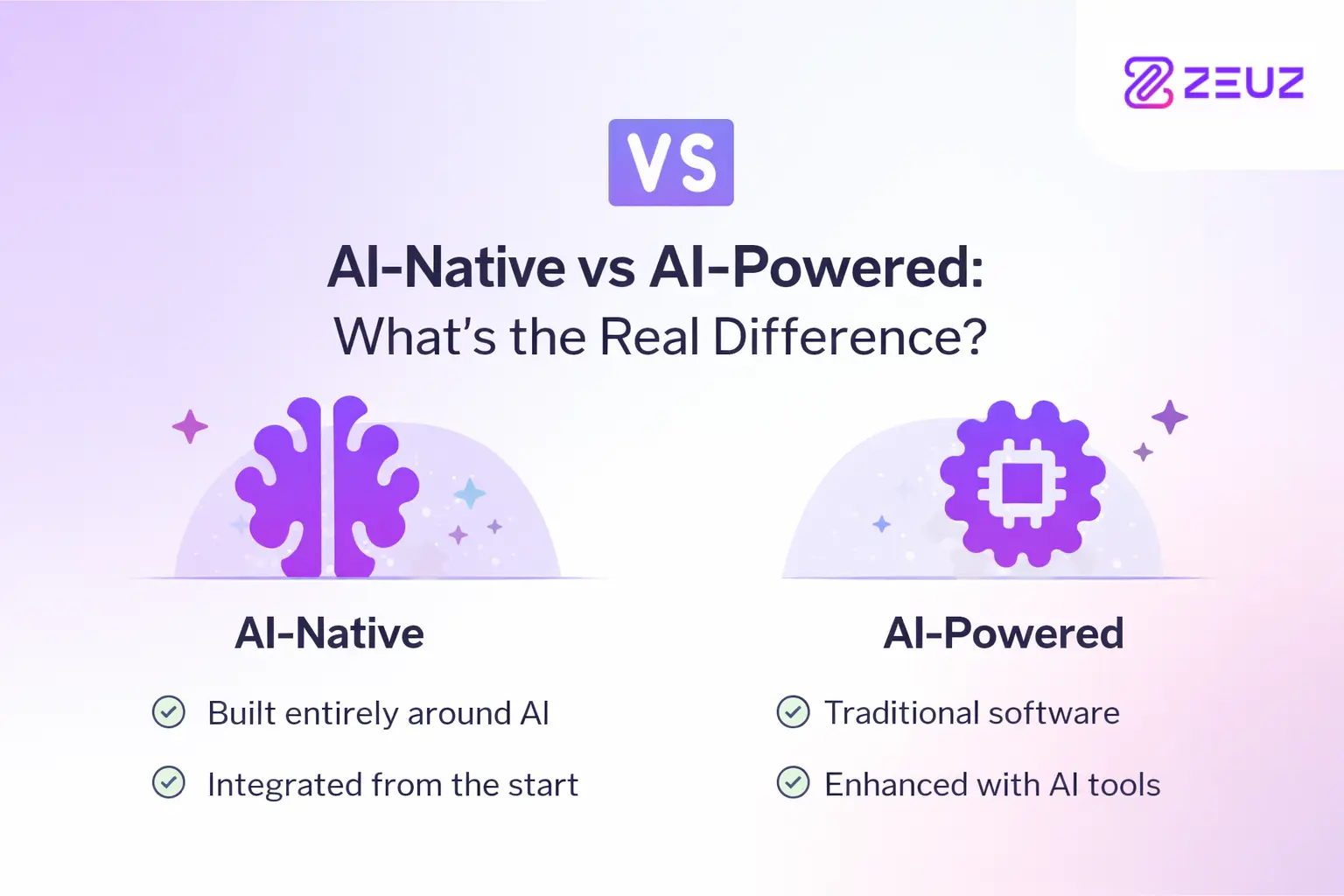
AI-powered → AI is added on top of existing systems
AI-native → AI is the foundation of the system
That’s it.
But the implications of that difference are massive.
What is AI-Powered Software Development?
Let’s start with what most teams are already using.
Tools like AI code generation tools or generative AI for coding fall into this category. They help developers write code faster, reduce repetitive work, and improve productivity.
But here’s the catch.
👉 The core system doesn’t change.
You still have:
Separate tools
Manual coordination
Fragmented workflows
AI is helping, but it’s not understanding the whole system.
👉 software lifecycle automation driven by intelligence
Everything connects:
Product decisions
Development
Testing
Release
2. Deep System Understanding
Using engineering intelligence tools, the platform builds a live map of:
Dependencies
APIs
Code relationships
Risk areas
This is not static documentation. It’s a living system.
3. Predictive Decision-Making
Instead of reacting, AI-native systems:
Predict defects
Identify risky changes
Recommend actions
This is where AI-driven software development becomes powerful.
4. Autonomous Capabilities
AI-native platforms enable:
Autonomous software testing
Autonomous software development (partial)
Intelligent release decisions
Not fully automatic, but significantly reduced manual effort.
Impact on Development Teams
The difference is not just technical. It changes how teams work.
With AI-Powered Tools
Developers write code faster
QA runs tests more efficiently
DevOps automates pipelines
👉 But coordination is still manual
With AI-Native Systems
AI connects all stages
AI highlights risks automatically
AI supports decisions across teams
👉 Teams work smarter, not just faster
AI in Software Engineering: A Shift in Thinking
When we talk about AI in software engineering, most people think about coding tools.
But the real shift is:
👉 From task execution → to system-level intelligence
AI is no longer just helping developers.
It is helping the entire engineering process.
How This Affects Product Development
This difference also shows up in AI product development.
AI-Powered Approach
Product team defines features
Dev builds
QA tests
Disconnected flow.
AI-Native Approach
AI analyzes user data (via business intelligence tools)
Suggests priorities
Aligns development with business impact
This creates AI-driven product development that is actually data-backed.
The Role of DevOps in This Shift
DevOps also evolves.
With an AI DevOps platform, you get:
Smarter pipelines
Risk-aware deployments
Fewer failures
This is where software lifecycle automation becomes truly intelligent.
When Should You Use AI-Powered vs AI-Native?
Let’s be practical.
Use AI-Powered if:
You want quick improvements
You’re enhancing existing workflows
You’re not ready for major system changes
Move to AI-Native if:
Your system is growing complex
You’re dealing with frequent bugs or delays
You want long-term scalability and intelligence
The Direction the Industry is Moving
This is not a debate for long.
The industry is clearly moving toward:
AI-native software development platforms
Intelligent SDLC systems
Autonomous workflows
Because complexity is increasing, and manual coordination simply doesn’t scale anymore.
Final Thoughts
AI-powered tools are a step forward.
But they are not the final destination.
They make existing systems better
They don’t fix the core problem
AI-native systems, on the other hand:
Remove fragmentation
Introduce real intelligence
Enable smarter, faster delivery
One Clear Takeaway
AI-powered improves tasks. AI-native transforms the entire system.
And that difference is what will define the next generation of software development.
Frequently Asked Questions
1. What is the main difference between AI-native and AI-powered software?
The core difference is architecture. AI-powered software adds AI features on top of existing systems, while AI-native software is built with AI at its core. AI-powered tools enhance tasks, whereas AI-native systems understand and manage the entire software lifecycle intelligently.
2. Is AI-native software better than AI-powered tools?
Not always, it depends on your needs. AI-powered tools are ideal for quick productivity gains and improving existing workflows. AI-native systems are better for complex environments where scalability, automation, and system-level intelligence are required.
3. What are examples of AI-powered software development tools?
AI-powered tools include:
Code editors with AI suggestions
Automated testing tools
Predictive analytics dashboards
These tools improve efficiency but still operate in disconnected workflows without full system awareness.
4. How does AI-native software improve the software development lifecycle?
AI-native systems unify the entire SDLC by connecting requirements, development, testing, and release into one intelligent system. They enable predictive decision-making, risk detection, and automation across workflows instead of reacting after issues occur.
5. When should a company switch from AI-powered to AI-native systems?
A company should consider moving to AI-native when:
Systems become complex
Bugs and delays increase
Manual coordination slows teams down
Long-term scalability and automation are priorities
AI-native becomes essential as operational complexity grows.
Because modern software systems are too complex for fragmented tools. AI-native platforms reduce silos, introduce system-level intelligence, and enable autonomous workflows—making them more scalable and efficient for future software development.