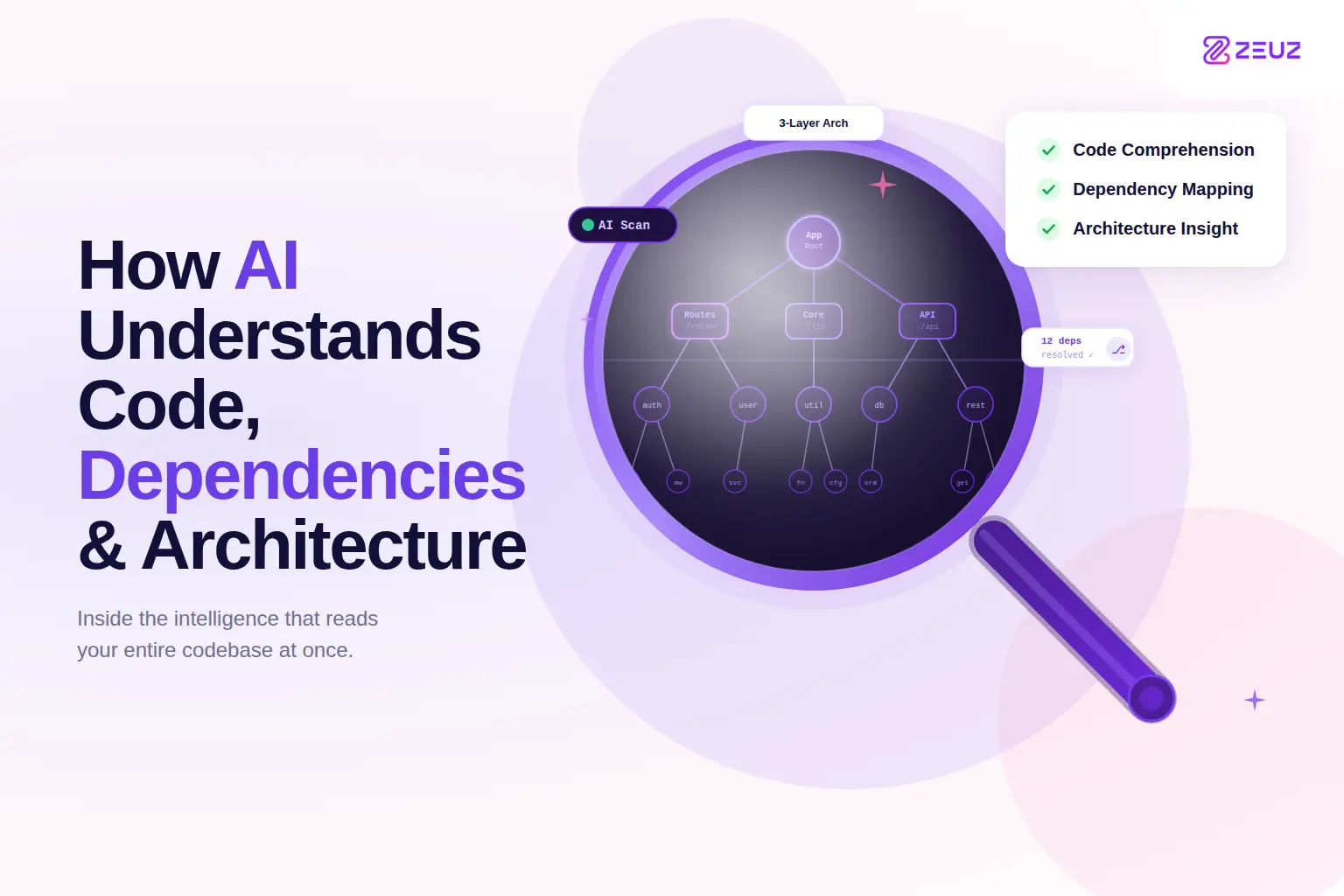
AI is no longer just helping developers write code.
→ It is helping them understand the entire system.
From:
isolated code to
connected intelligence
From:
manual analysis to
automated understanding
And that changes everything.
One Clear Takeaway
AI transforms software engineering by turning code, dependencies, and architecture into an understandable, intelligent system.
FAQS
Q1. How does AI understand code beyond just reading syntax? AI uses semantic understanding to interpret what a function intends to do, how data flows through the code, and where logic might break, going far deeper than simple pattern recognition.
Q2. How does AI detect hidden dependencies in a software system? AI builds dependency graphs that map service-to-service relationships, API interactions, and data flow paths, including indirect and implicit connections that manual tracking almost always misses.
Q3. Can AI predict the impact of a code change before it's deployed? Yes. AI performs change impact analysis by scanning affected components, predicting potential failures, and highlighting risky areas, helping teams avoid unexpected side effects before deployment.
Q4. How is AI-driven software development different from traditional development tools? Traditional tools treat code as isolated files. AI treats code as part of a connected system, answering not just "what does this do?" but "how does this affect everything else?"
Q5. How does AI help with software architecture analysis? AI combines code structure, runtime behavior, and performance metrics to identify architectural patterns, detect bottlenecks, flag fragile components, and map high-risk integrations across the system.
Q6. What are the biggest challenges of adopting AI in software development? The three main challenges are data integration (AI needs access to all system data), model accuracy (poor data leads to weak insights), and team adoption (developers must learn to trust AI-generated recommendations).